Get a Quote
Drop Us A Line

Hot tubs require more than plumbing and placement. They depend on a stable, code-compliant electrical system that can safely operate in a wet environment. This makes hot tub electrical installation one of the most safety-sensitive residential upgrades.
From circuit design to inspection approval, every step must follow Ontario Electrical Safety Code requirements. Proper planning ensures the system operates reliably while reducing risks associated with moisture and sustained electrical load.
Hot tubs draw continuous power for heating elements, pumps, and control systems. Unlike many household devices, they operate for extended periods and must maintain consistent performance.
Because of this, hot tub electrical installation requires:
Without proper planning, systems may overheat, trip breakers, or experience reduced performance.
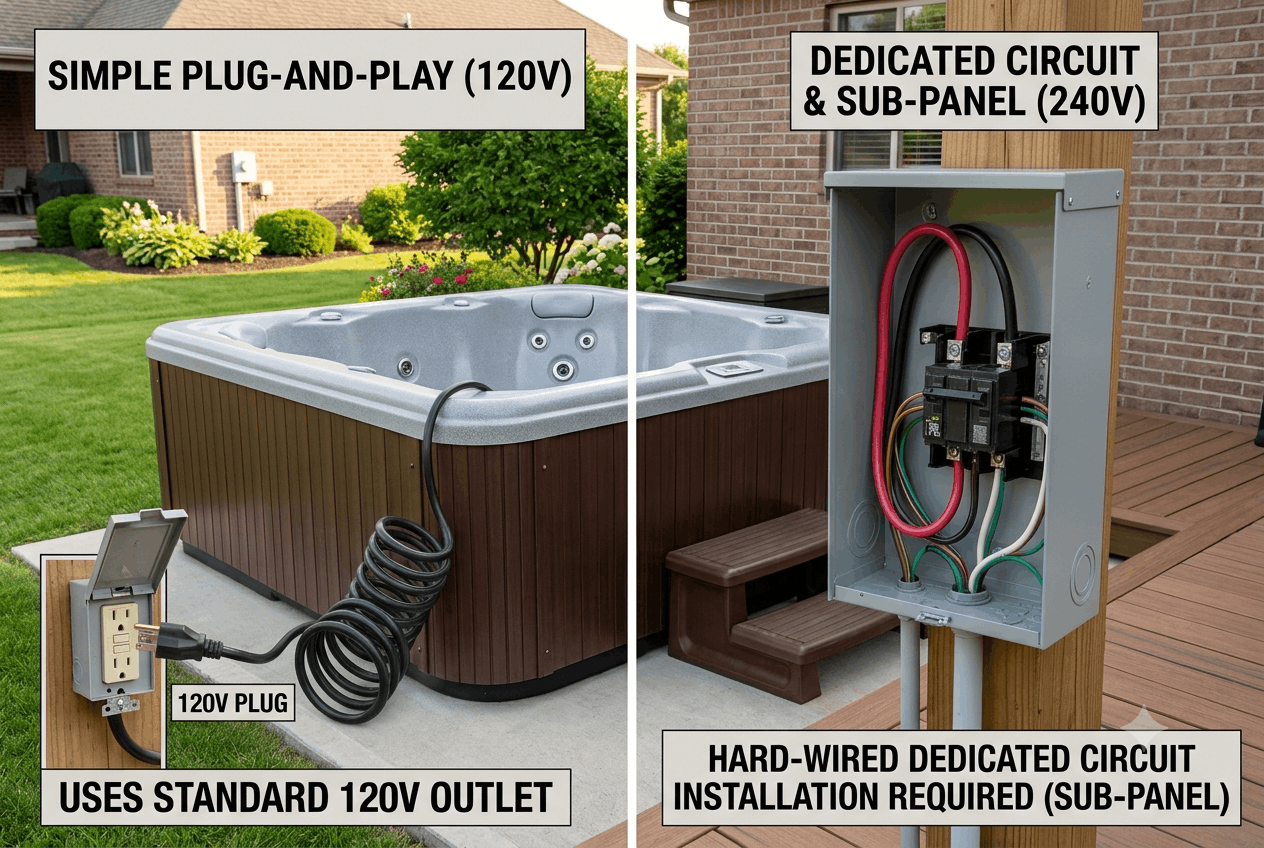
Yes. Most hot tubs require a dedicated 240V circuit to handle continuous power demand without affecting other household circuits.
Yes. An ESA permit is required in Ontario, and the installation must be inspected before the system is energized.
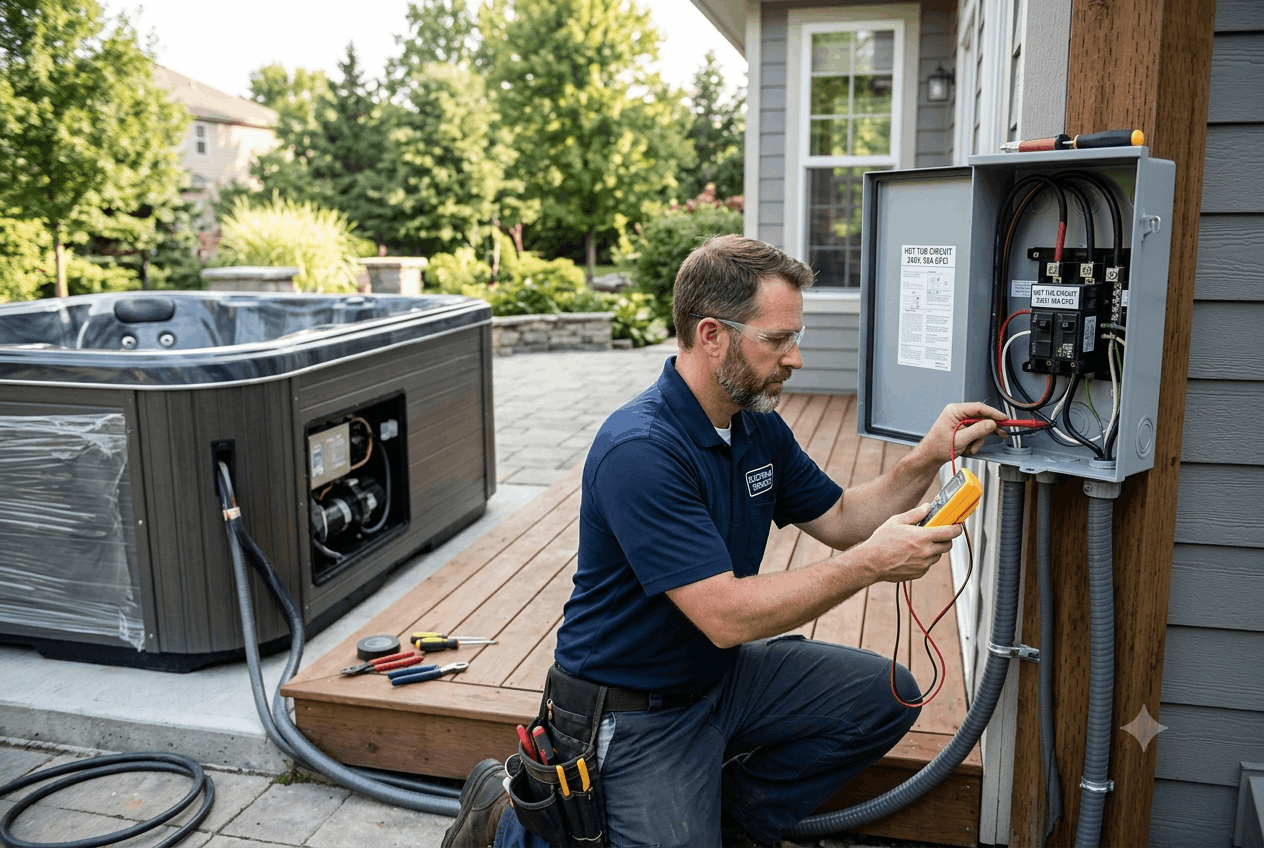
GFCI protection is mandatory to prevent electrical shock, along with proper grounding, bonding, and a disconnect switch.
A licensed electrician experienced in hot tub electrical installations is required to ensure compliance with the Ontario Electrical Safety Code and safety standards.
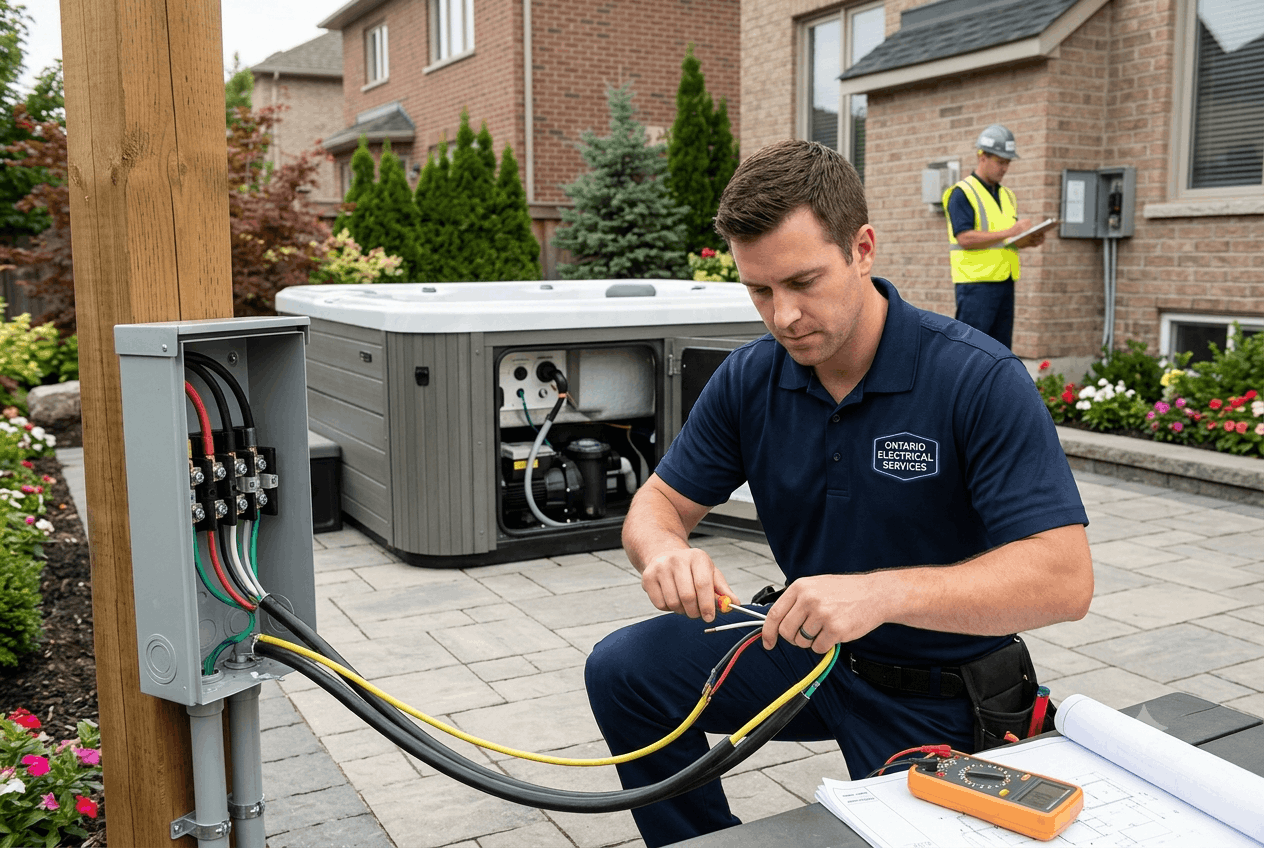
A licensed hot tub electrician ensures that the installation meets both safety and regulatory standards. Electrical work in Ontario must be performed by certified contractors who can file permits and coordinate inspections.
Licensed professionals handle:
Homeowners searching for a hot tub electrician near them should prioritize licensing and experience with outdoor electrical systems.
Ground fault circuit interrupter protection is mandatory for hot tubs. GFCI devices detect current imbalances and shut off power to prevent electric shock.
Installation requirements include:
These components must be installed correctly to ensure safe operation. Improper placement or wiring can lead to inspection failure or safety risks.
Hot tubs typically operate on 240-volt circuits and may require 40 to 60 amps, depending on the model. The home’s electrical panel must support this demand.
During hot tub electrical installation, electricians evaluate:
A dedicated circuit ensures the hot tub operates without interfering with other household systems.
Hot tubs are usually installed outdoors, which introduces additional safety requirements. Electrical systems must withstand moisture, temperature changes, and environmental exposure.
Outdoor installations require:
A qualified hot tub electrician ensures these elements meet code and function reliably over time.
All hot tub electrical work in Ontario requires a permit from the Electrical Safety Authority. Licensed contractors manage this process to ensure compliance.
The process includes:
Proper documentation confirms that the hot tub electrical installation meets safety standards and can support insurance requirements.
Canadian Wire Wizards provides licensed hot tub electrical services across the GTA. Their structured installation process includes:
For homeowners searching for a hot tub electrician near them, their team offers compliant installation aligned with Ontario safety standards.
Hot tubs depend on properly designed electrical systems to operate safely and consistently. From GFCI protection to panel capacity, each component plays a role in long-term performance. Choosing a licensed hot tub electrician ensures the installation meets code requirements and passes inspection without issues.
For professional hot tub electrical installation, contact Canadian Wire Wizards to plan a safe, compliant setup that supports reliable operation.