Get a Quote
Drop Us A Line

Commercial EV charger installation costs are no longer a peripheral budget line item for property owners and fleet operators across the Greater Toronto Area. Demand is accelerating across retail, hospitality, and multifamily sectors, and organizations that treat charging infrastructure as a strategic asset rather than a reactive expense consistently achieve stronger long-term returns.
Canadian Wire Wizards, a licensed electrical contracting company in the GTA established in 2018 and owned and operated by Demetrois Alafogiannis, with over 35 years of combined experience, works with commercial clients across Toronto, North York, Scarborough, Mississauga, and other nearby areas to plan and execute these projects in full regulatory compliance.
Fleet electrification is accelerating across retail, hospitality, and logistics sectors at a pace that outstrips most infrastructure planning cycles. Demand signals from property managers and municipal operators indicate that sites without charging amenities are increasingly at a competitive disadvantage, particularly in high-density urban corridors across the GTA.
A total cost of ownership model for commercial EV charger installation cost accounts for hardware, civil works, electrical upgrades, software subscriptions, and maintenance over the full asset lifecycle. Lifetime operational savings relative to internal combustion infrastructure are materially higher when demand charges are managed proactively. For a deeper breakdown of sustainability and resiliency targets, see our related guide on energy efficiency planning.
Commercial Level 2 charging stations are commonly cited at several thousand per port installed (equipment + installation). For DC fast charging, total costs are much higher, depending on power level and site work; some sources cite per-port totals exceeding that for complex sites.
The biggest cost drivers are “make-ready” electrical and civil work—available electrical capacity, panel/switchgear/service upgrades, transformer or utility service upgrades, and the distance to the power source (conduit/trenching and restoration). Network/software fees, permitting/inspections, and commissioning/maintenance planning can also materially change the total cost of ownership.
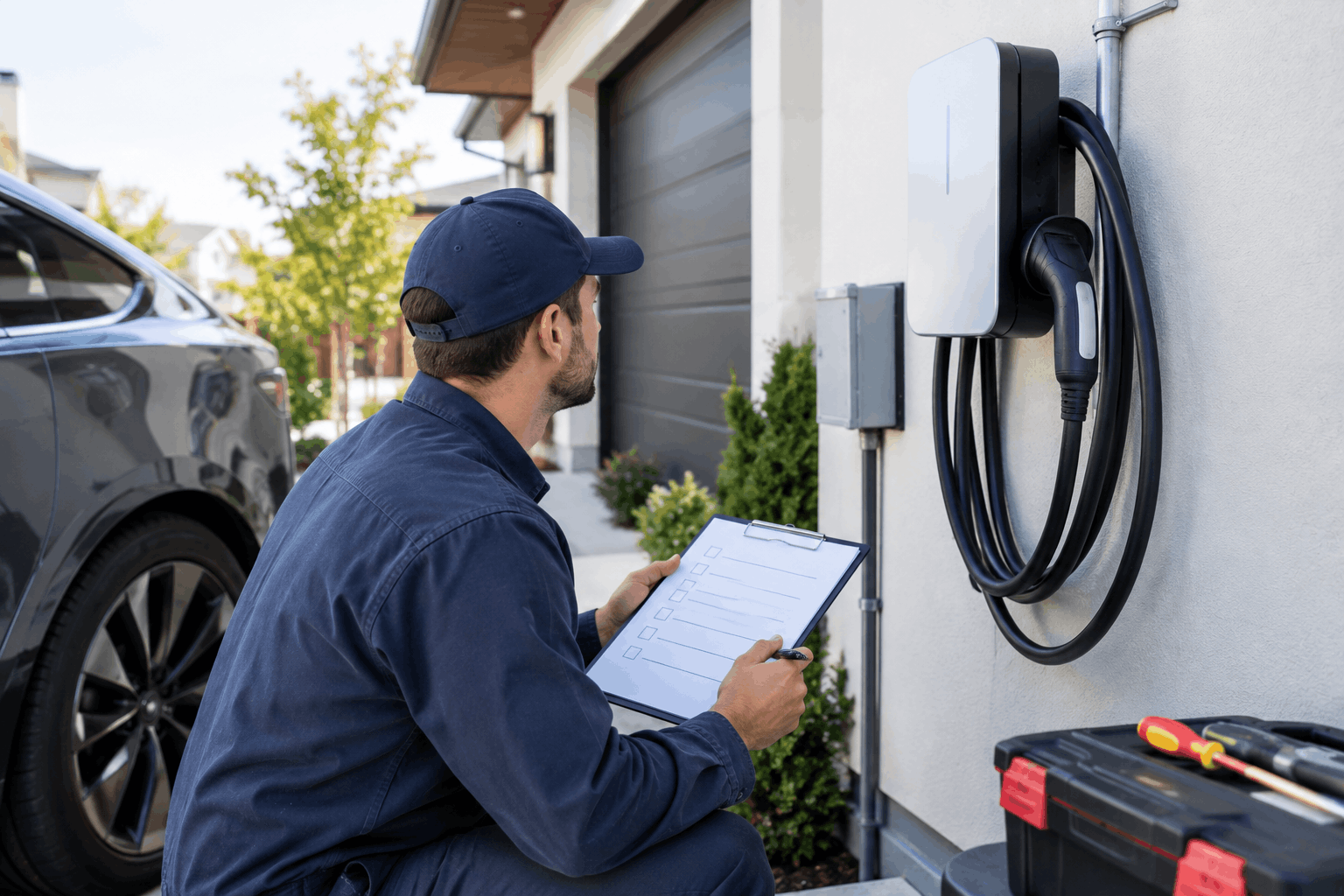
In many North American jurisdictions, installing EVSE typically requires electrical permitting and inspection, especially when adding a new circuit or upgrading electrical service. Commercial projects commonly include permit filings and inspections as a standard part of the installation scope.
Hardware typically accounts for a meaningful but not dominant share of total project costs, with soft costs frequently exceeding equipment spend at complex sites. Specifying chargers that comply with Open Charge Point Protocol is essential to prevent vendor lock-in and ensure network flexibility as technology evolves.
A utility-side transformer upgrade is one of the most consequential and frequently underestimated cost drivers. In a real-world depot scenario in Scarborough, a mid-sized fleet operator discovered that their existing service entrance could not support simultaneous charging without a full transformer replacement, adding substantial lead time and cost. Site power capacity assessments conducted before procurement prevent these surprises.
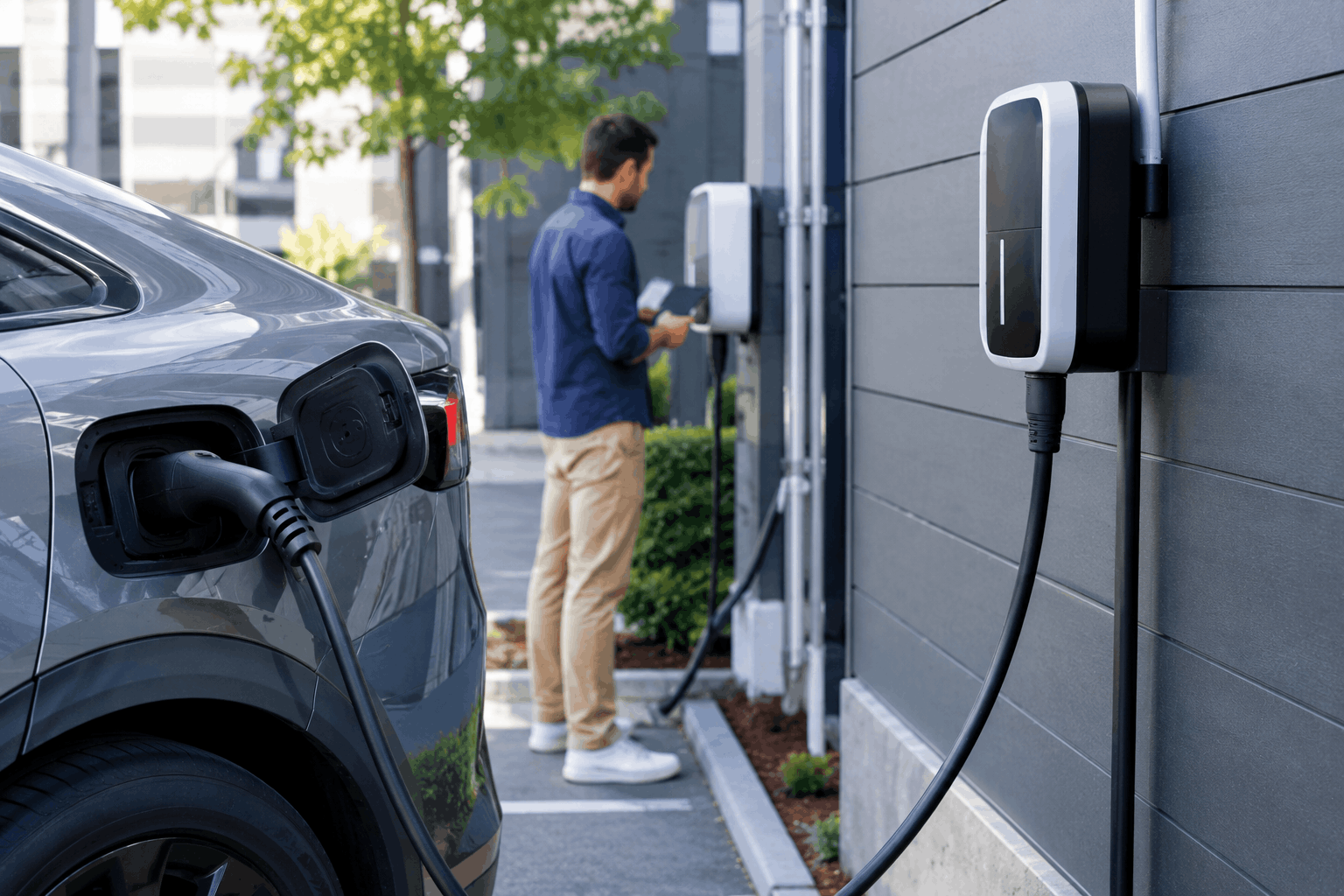
Level Two charging is well-suited to workplace and multifamily deployments where vehicles dwell for extended periods. The relative cost of Level Two infrastructure is materially lower than DC fast charging on a per-port basis, making it the preferred choice for staged rollouts in office parks and residential towers across Vaughan and Richmond Hill.
DC fast charging requires substantially higher power capacity and dedicated electrical infrastructure, reflecting its higher commercial EV charger installation cost profile. Retail and service station operators increasingly use tiered pricing and freemium access models to attract customers and generate ancillary revenue, offsetting the higher capital outlay over time.
Unexpected grid upgrade expenses are among the most commonly reported sources of budget overruns when organizations hire commercial EV charger installers without prior utility engagement. Coordinating with the local utility provider during the feasibility phase, rather than after permit submission, consistently reduces cost exposure and schedule risk.
Retrofit costs for sites that did not plan for conduit capacity or panel headroom are higher than those for equivalent provisions made during initial build. Designing conduit pathways and panel capacity to accommodate megawatt-level charging advancements protects the capital investment across a longer asset lifecycle.
A substantial share of the eligible commercial EV charger installation costs can be offset through federal and provincial grant programs targeting zero-emission vehicle infrastructure and clean energy adoption. Canadian Wire Wizards assists clients in identifying applicable programs, including those administered through Natural Resources Canada and provincial clean transportation initiatives.
Networked charging management platforms with dynamic load balancing deliver a meaningful reduction in peak demand charges by distributing load across ports based on real-time grid conditions. Integrating time-of-use rate optimization and on-site energy storage, connected through inverters, further reduces operating cost without compromising charging availability.
Staged modular rollouts consistently achieve higher project success rates than single-phase deployments because they allow teams to validate electrical assumptions before making a full capital commitment. Power upgrade simulator tools, available from utility providers and engineering consultants, help quantify service-entrance requirements before design is finalized.
Reviewing capital expenditure and cashflow models against available incentive timelines ensures that project phasing aligns with funding cycles. Canadian Wire Wizards offers comprehensive installation assessments for commercial clients across the GTA, covering service upgrades from 120 V to 240 V and 347/600 V systems, panel upgrades, and commercial EV charging station deployment. Scheduling an assessment early in the planning process is the most reliable way to control commercial EV charger installation cost from the outset. For more details, contact us now!