...

Hot tubs combine electricity and water—two elements that demand careful coordination and strict safety controls. That’s why every installation must follow provincial code, manufacturer requirements, and proven field practices. 

A professional hot tub electrician plans the work around load capacity, protection devices, and placement rules to reduce risk and ensure reliable operation. Knowing how certified electricians handle hot tub wiring makes it clear what is needed for a secure, legal setup right away.

Role of a Licensed Hot Tub Electrician in Canada

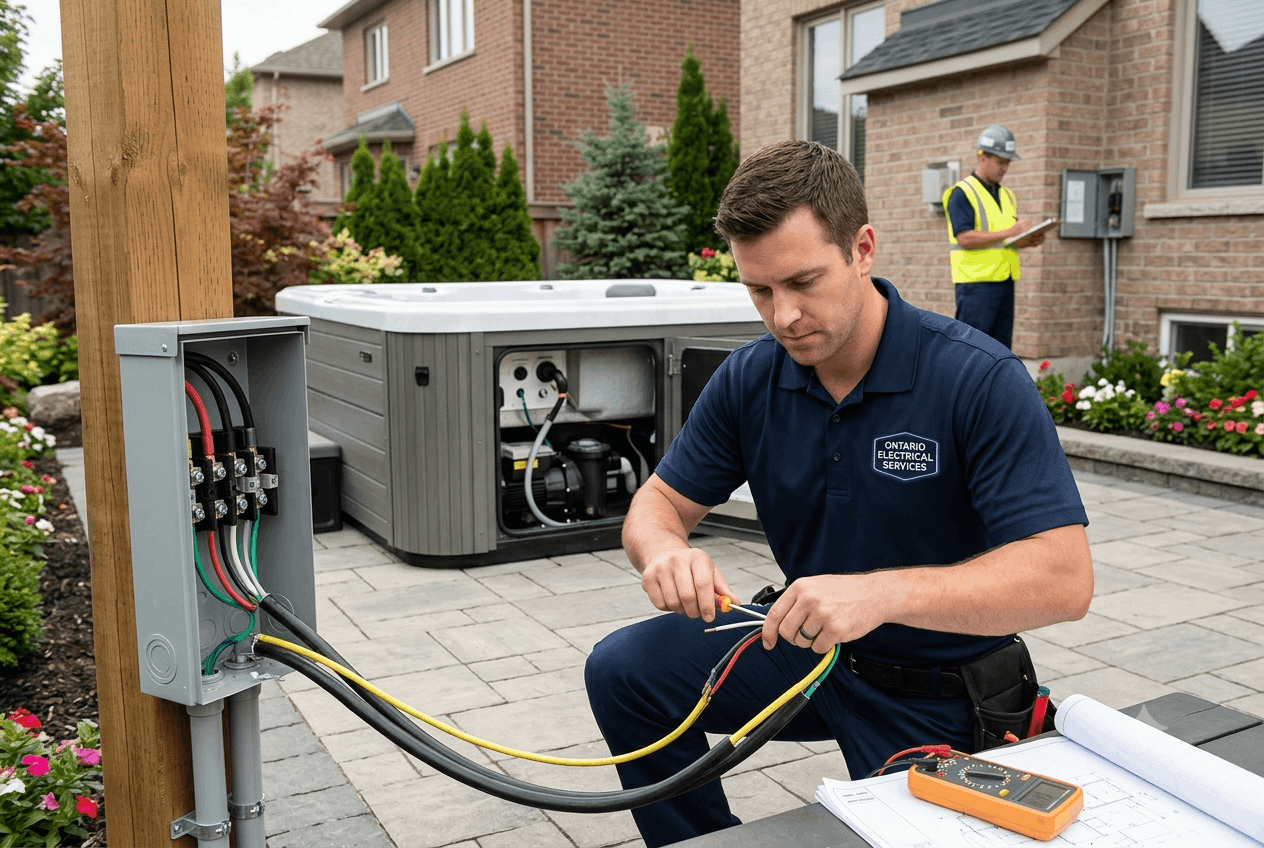
In Canada, hot tub wiring is not a DIY task. A licensed hot tub electrician in Canada is responsible for designing and installing a system that meets the Ontario Electrical Safety Code (OESC) and passes Electrical Safety Authority (ESA) inspection. Core responsibilities include:

  • Performing load calculations and verifying panel capacity
  • Selecting the correct wire gauge, breakers, and conduit
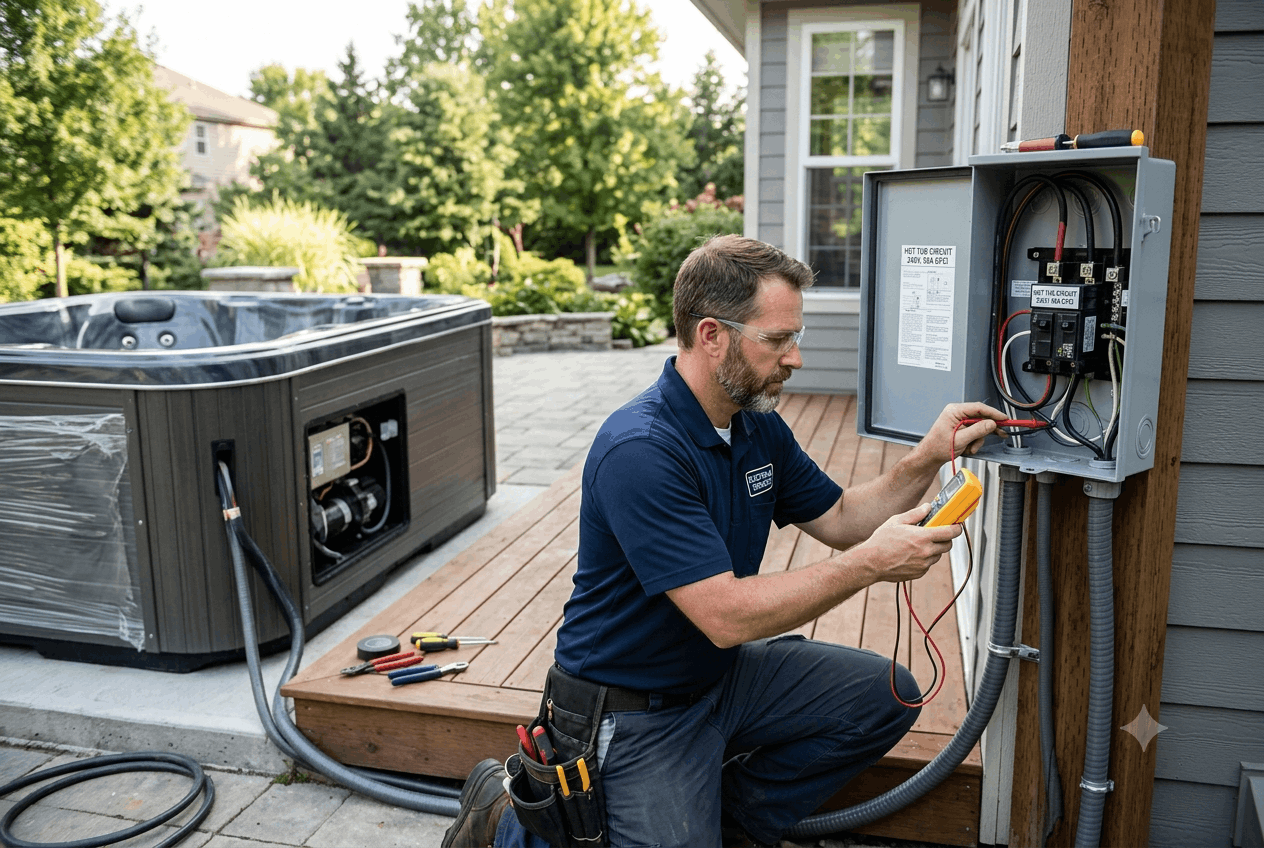
  • Installing GFCI protection and disconnects
  • Coordinating permits and inspections
  • Testing and documenting compliance

This role ensures the system operates safely under sustained load and in wet conditions.

Code Requirements for Outdoor and Indoor Hot Tub Electrical Installations

Whether the tub is indoors or outdoors, code requirements govern protection, spacing, and materials. Key requirements include:

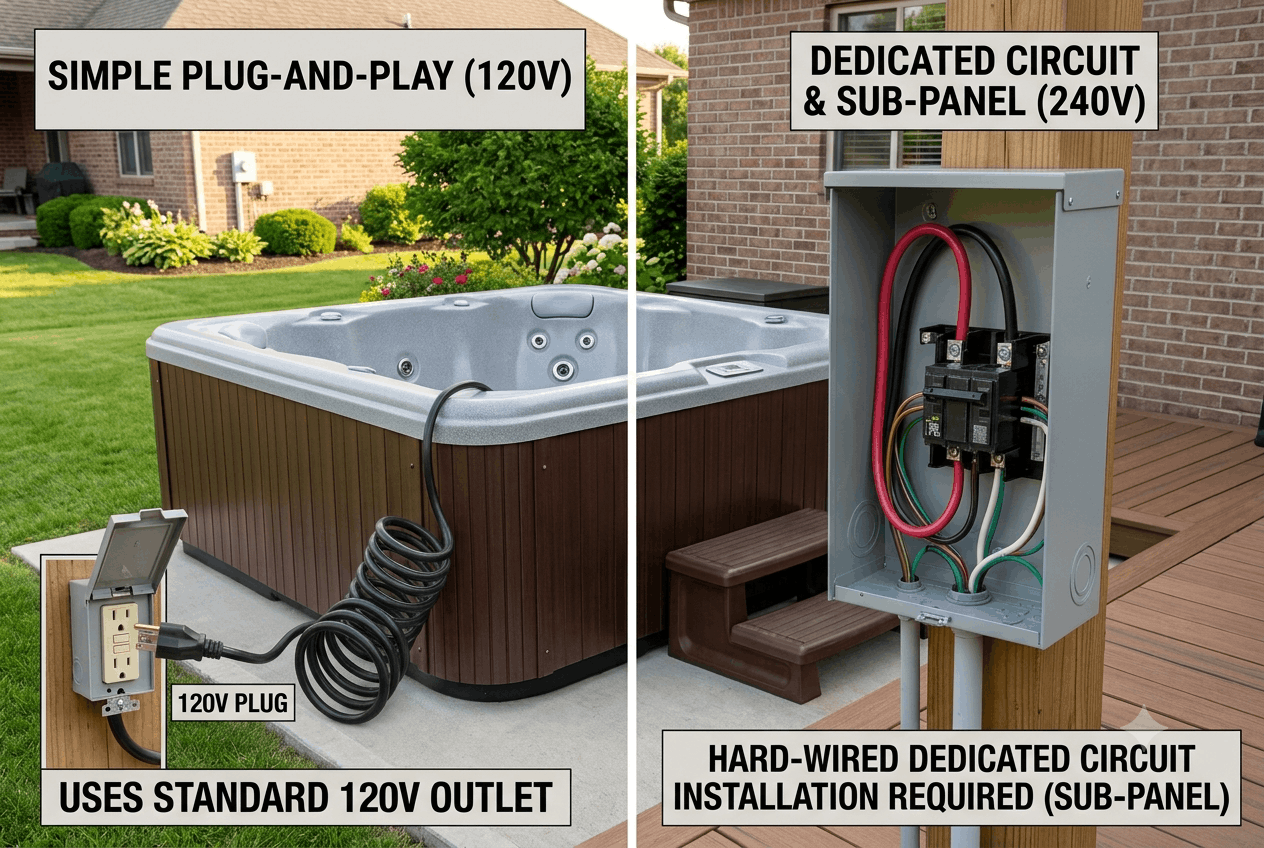
  • Dedicated circuits sized to manufacturer specifications
  • GFCI protection for shock prevention
  • Bonding and grounding of metallic components
  • Weather-rated materials for outdoor installations

Outdoor installations also require corrosion-resistant fittings and moisture-rated enclosures, while indoor installations must address ventilation and clearances.

Planning for GFCI, Disconnects, and Load Requirements

Best practice begins with planning. Electricians determine the tub’s voltage and amperage needs, then size the circuit accordingly. Safety devices are placed with precision:

  • GFCI breakers or receptacles installed per code
  • Disconnect switches within sight of the tub and at required distances
  • Breaker labeling for clear identification

Proper planning avoids nuisance trips, overheating, and inspection failures.

Placement and Wiring Distance Considerations

Placement affects both safety and performance. Electricians evaluate:

  • Distance from the electrical panel to minimize voltage drop
  • Clearance from doors, windows, and overhead conductors
  • Accessibility for service and emergency shutoff
  • Protection from physical damage and moisture

Routing wiring through the shortest compliant path reduces material stress and simplifies future maintenance.

Cost of Hot Tub Electrical Installation in Canada

The cost of hot tub electrical installation in Canada varies by site conditions rather than a single flat figure. Factors influencing scope include:

  • Panel capacity and available breaker space
  • Distance between panel and tub location
  • Indoor versus outdoor placement requirements
  • Need for trenching or surface conduit
  • Permit and inspection coordination

Licensed electricians assess these variables on-site and provide a clear scope before work begins.

How to Choose a Qualified Hot Tub Electrician in Your Area

Selecting the right contractor ensures safety and compliance. Best practices when choosing include:

  • Verifying an active ECRA/ESA license
  • Confirming experience with spa and hot tub circuits
  • Ensuring permits and inspections are handled by the contractor
  • Reviewing written estimates that outline scope and responsibilities
  • Confirming use of CSA-approved materials

A qualified hot tub electrician explains requirements clearly and documents compliance.

Safety, Code, and Comfort Depend on Proper Installation

Hot tub enjoyment depends on safe, reliable power delivery. Precision planning, licensed workmanship, and strict adherence to code protect people and property while supporting long-term performance. For dependable hot tub electrical installation, contact Canadian Wire Wizards to arrange a licensed assessment and compliant setup.


FAQs

Yes. An ESA permit is required for new circuits and hot tub wiring.
No. Hot tubs require a dedicated circuit sized to the manufacturer’s specifications.
Yes. Outdoor installations require weather-rated materials and corrosion protection.
GFCI devices reduce shock risk by cutting power when an imbalance is detected.
Before delivery, early planning ensures panel capacity, placement, and permits are ready.

Author

Demetrois Alafogiannis

Demetrois Alafogiannis is an experienced electrical professional and entrepreneur with over 20 years of hands-on experience in residential and commercial electrical services. He is the President and Lead Electrician at Canadian Wire Wizards Inc., a Toronto-based electrical services company known for quality workmanship, safety, and ... Read More

What It Takes to Install a Home EV Charger That’s Future-Proof
Electric vehicle ownership is accelerating across Ontario, and home charging has quickly become a baseline expectation rather than a luxury. Installing a charger, however, is not just about meeting
A Complete Guide to Hot Tub Electrical Installation for Ontario Homes
Installing a hot tub is often planned around comfort and relaxation, but the electrical side of the project determines whether that experience is safe, reliable, and compliant. Hot tubs place a
How to Find a Licensed Electrician for a Home Electrical Inspection Near You
Electrical inspections play a critical role in protecting home safety, insurance eligibility, and long-term property value. In Ontario, inspections are not informal walkthroughs—they are regulated
Best Electrician for EV Charger Installation Near Toronto
Electric vehicle ownership continues to rise across the Greater Toronto Area, and with it comes the need for reliable home charging solutions. Installing an EV charger is not just a convenience
Best Companies in Toronto for Full Knob and Tube Wiring Removal and Replacement
Knob and tube (K&T) wiring remains present in many Toronto homes built before the 1950s. While these systems may still carry electricity, they were never designed for today’s power demands,
100 Amp vs 200 Amp Panels in Ontario Homes: Which One Do You Actually Need?
Electrical demand in Ontario homes has changed significantly over the last two decades. Central air systems, EV chargers, heat pumps, finished basements, and home offices all place added pressure on

What Our Customers Says

-->