Get a Quote
Drop Us A Line

Installing a hot tub is often planned around comfort and relaxation, but the electrical side of the project determines whether that experience is safe, reliable, and compliant. Hot tubs place a sustained electrical demand on a home and operate in proximity to water, making planning essential.
A proper hot tub electrical installation requires understanding power requirements, safety devices, permits, and inspection steps before the spa is ever filled. This guide walks Ontario homeowners through what they need to plan for, from technical details to choosing the right professionals.
Electrical planning should begin early—well before delivery day. Many issues arise when electrical preparation is treated as an afterthought. Key considerations include panel capacity, wiring distance, outdoor exposure, and inspection timing. Addressing these factors upfront helps avoid delays, failed inspections, or unsafe temporary connections.
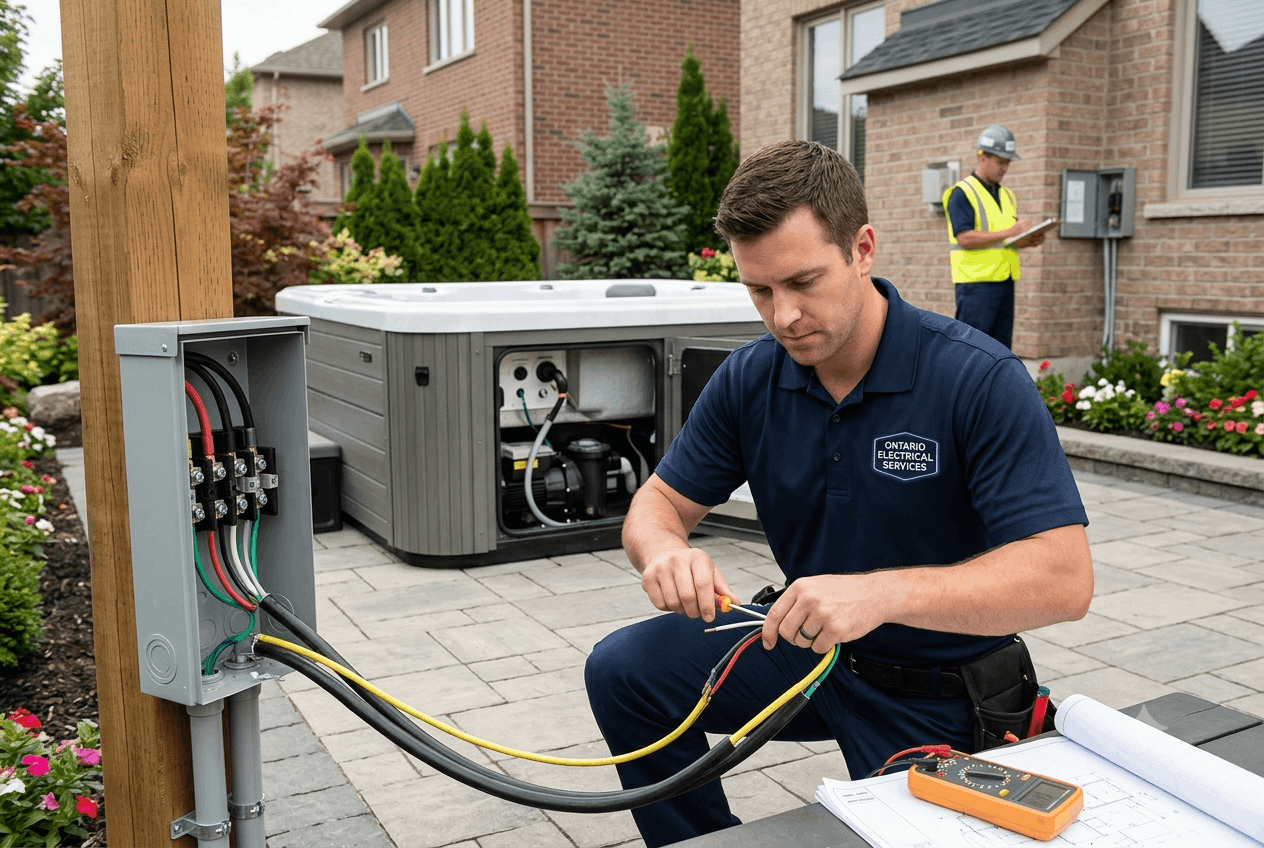
A licensed hot tub wiring electrician typically evaluates the home’s electrical system and outlines requirements before installation begins.
Do hot tubs require a dedicated electrical circuit in Ontario?
Yes. Most hot tubs require a dedicated circuit sized to the manufacturer’s specifications.
Is a permit required for installing a hot tub?
Yes. ESA permits, and inspections are required for hot tub wiring in Ontario.
Can a general electrician install a hot tub?
Installation should be completed by a licensed electrician experienced with hot tub wiring and safety requirements.
What safety devices are required for hot tub wiring?
GFCI protection, disconnect switches, proper grounding, and approved conduit are required under the Ontario code.
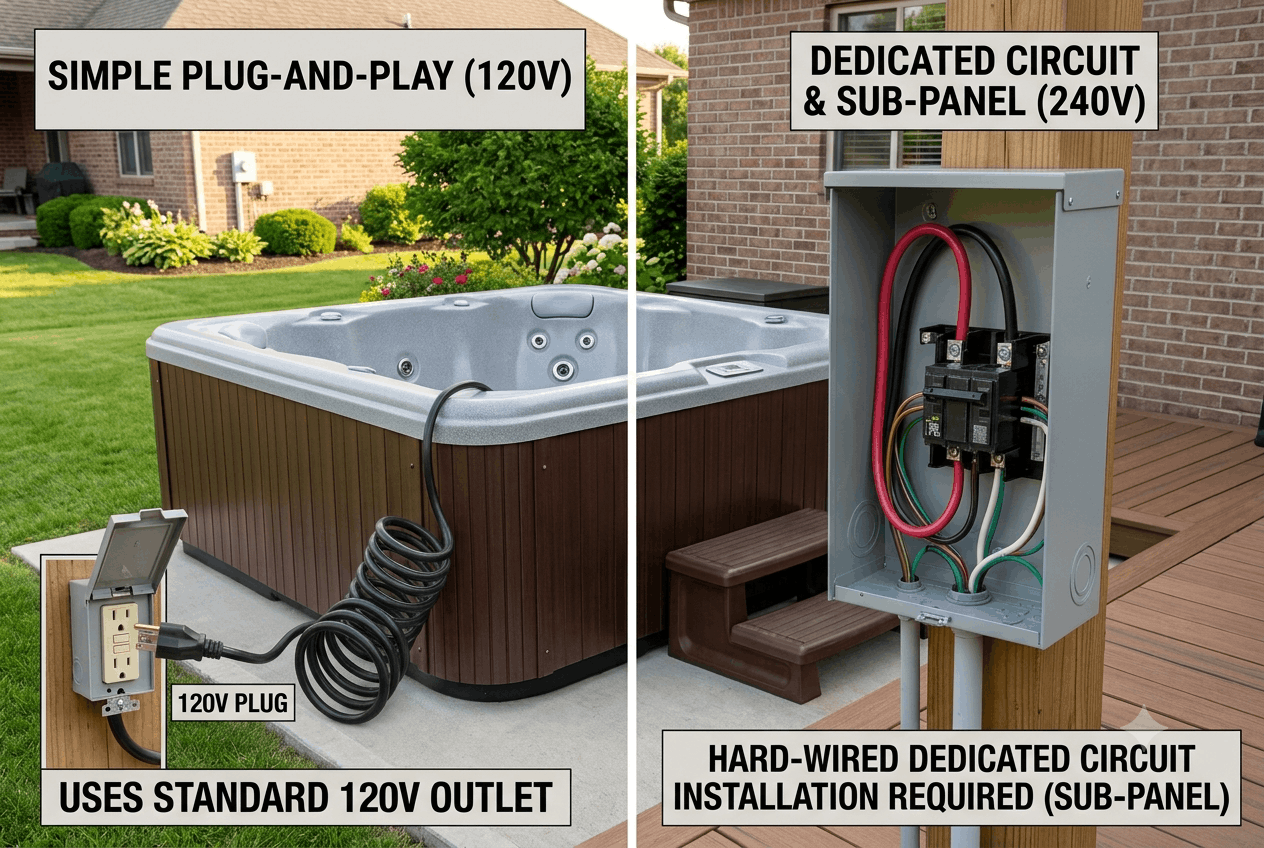
Hot tubs are not all powered the same way. Most modern units operate on 240 volts, while some smaller models may support 120 volts. Amperage requirements vary by size, heater rating, and pump configuration.
Electricians confirm:
Accurate sizing ensures the system operates without overheating, nuisance tripping, or performance issues.
Most hot tubs require a dedicated electrical circuit so that no other appliances or systems draw power from the same line. This is not a preference—it is a safety and code requirement designed to manage sustained electrical load and reduce the risk of overheating or nuisance tripping. Hot tubs operate for extended periods and rely on heaters, pumps, and control systems that demand consistent power delivery.
In many Ontario homes, especially those built before modern electrical standards, available breaker space may already be limited. Panels designed decades ago were not intended to support continuous, high-draw equipment alongside today’s household loads. When capacity is insufficient, electrical upgrades become part of the installation process rather than optional additions.
Depending on the findings of a system assessment, a hot tub electrical installation may involve one or more of the following steps:
Each configuration addresses different capacity and layout challenges. The choice depends on panel condition, service size, distance from the panel to the spa, and overall electrical demand within the property.
A licensed electrician evaluates existing infrastructure to determine the safest and most compliant setup. This includes reviewing service ratings, conductor sizing, grounding and bonding, and manufacturer specifications. By matching the electrical configuration to actual system capacity, the installation supports reliable operation while meeting Ontario Electrical Safety Code requirements.
Safety devices are non-negotiable when electricity and water intersect. Ontario Electrical Safety Code requirements include:
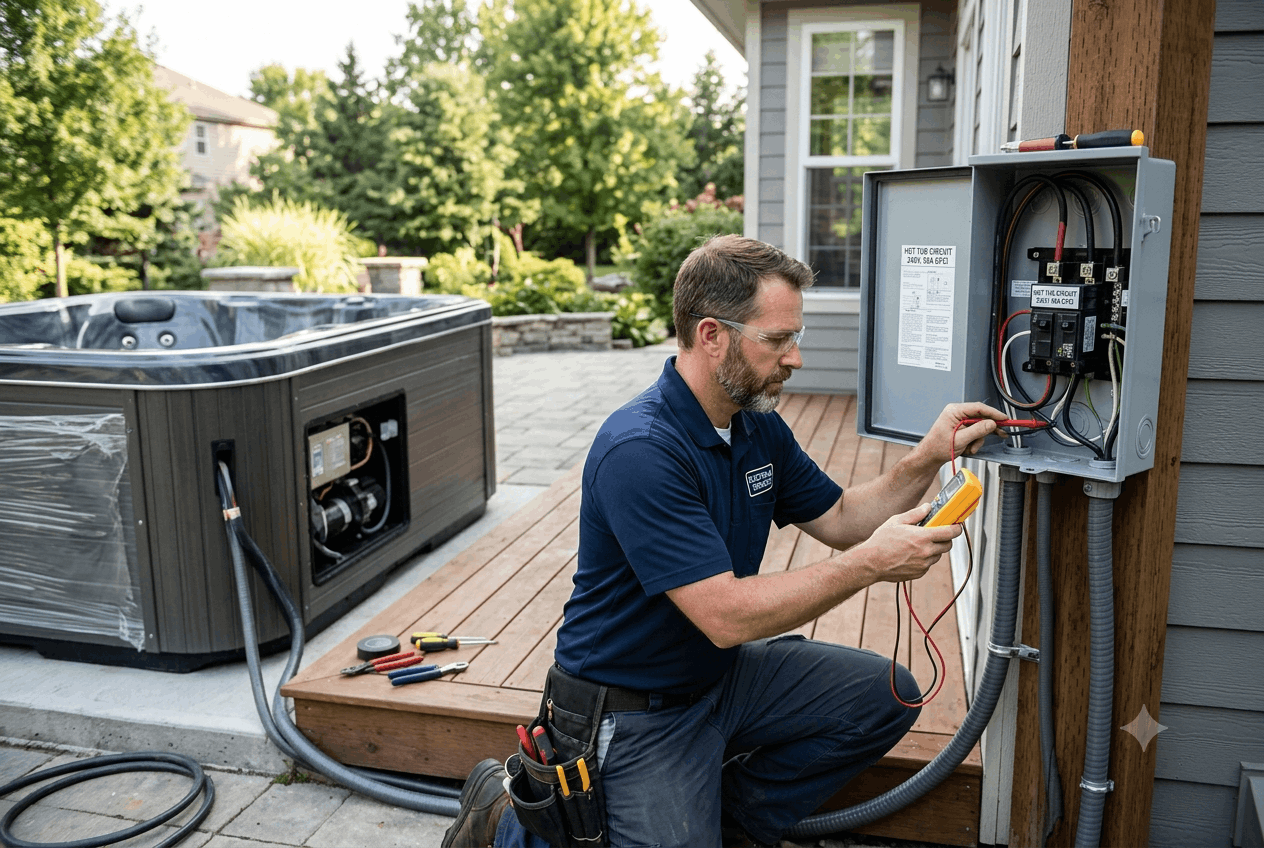
Professional hot tub wiring installation ensures these elements are placed correctly and tested before use.
In Ontario, hot tub wiring requires a permit filed with the Electrical Safety Authority (ESA). Licensed contractors manage this process, which includes:
Unpermitted work can lead to inspection failures, insurance issues, or complications during resale. Proper documentation protects homeowners long after installation is complete.
While general contractors may coordinate outdoor projects, electrical work for spas must be handled by licensed professionals. A hot tub electrician understands:
Relying on electrical specialists reduces risk and ensures compliance at every stage.
The scope of a hot tub electrical project varies by property. Factors that influence complexity include:
Inspections are typically scheduled after wiring is complete and before the tub is energized. Licensed electricians coordinate timelines to keep projects moving efficiently.
Canadian Wire Wizards provides licensed hot tub electrical services across Ontario. Their process includes:
This structured approach ensures each hot tub electrical installation meets safety standards and supports long-term performance.
A hot tub should add comfort—not concerns. Proper planning, licensed installation, and thorough inspection ensure the system operates safely and reliably for years. From voltage requirements to ESA approval, each step matters. For professional support from an experienced hot tub electrician, contact Canadian Wire Wizards to plan a compliant, worry-free installation.