


If your home was built between the 1960s and late 1970s, there is a reasonable chance it still contains aluminum wiring somewhere behind the walls. At the time, aluminum was a practical, affordable alternative to copper, and it was installed in thousands of homes across Toronto and the Greater Toronto Area. Decades later, that same wiring is now one of the more common reasons homeowners call an electrician, whether the concern is a flickering light, an insurance renewal that suddenly asks about wiring type, or a renovation that has opened up a wall for the first time in fifty years.
This guide walks through what aluminum wiring is, how to recognize the warning signs that it needs attention, the difference between pigtailing and full aluminum wiring replacement, what the Ontario Electrical Safety Code requires, and the practical benefits of upgrading to copper. Whether you are planning a renovation or addressing a specific concern in your home, the goal is to give you a clear picture of your options before you call an electrician.
Homeowners searching for aluminum wiring replacement in Toronto often face one of two situations: a specific symptom that has prompted concern, such as a warm outlet or a flickering fixture, or a more general question raised during a home purchase, insurance renewal, or planned renovation. Both situations benefit from the same starting point: understanding exactly what type of wiring is present, where it runs through the home, and what condition it is currently in. The sections below are organized to walk through that process step by step, from recognizing the material itself through to the code requirements and long-term benefits of addressing it properly.
Aluminum Wiring Replacement in Short: Aluminum wiring was commonly installed in Ontario homes from the 1960s through the late 1970s, and it can still be found behind the walls of many older properties today. As this wiring ages, its connections become more prone to loosening and oxidation than copper, which is why warning signs such as flickering lights, warm outlets, or a burning smell should prompt a professional inspection rather than a DIY check. Homeowners generally have two paths forward: pigtailing, which addresses connection points without opening walls, or full replacement, which removes aluminum wiring from active service entirely. Either approach must comply with Ontario’s Electrical Safety Code, which requires CO/ALR-rated devices and aluminum-approved connectors and restricts this work to licensed electrical contractors.
Understanding Aluminum Wiring and Why It Matters
Aluminum branch circuit wiring was widely used in Canadian homes from the 1960s through the late 1970s, largely because copper prices had risen sharply during that period and aluminum offered a lower-cost alternative for builders. Our beginner’s guide to aluminum wiring covers the basics of how this wiring was used and why it eventually fell out of favour, but the short version is that aluminum behaves differently from copper in ways that matter for long-term safety.
What Aluminum Wiring Is and Where It’s Commonly Found
Aluminum wiring is typically identified by its silver colour, as opposed to the reddish-orange tone of copper, and cable jackets are often marked with “AL,” “ALUM,” or “ALUMINUM” at regular intervals. It is most commonly found in homes built during the aluminum era, particularly in branch circuits feeding outlets, switches, and light fixtures throughout the house. However, the electrical panel and larger feeder cables were sometimes aluminum as well.
Checking for aluminum wiring is usually straightforward if the wire is visible, such as at the electrical panel or along an unfinished basement ceiling. In finished areas where wiring is hidden behind walls, an electrician can check at an outlet or switch by carefully removing the cover plate and inspecting the exposed wire, which is why a professional assessment is generally more reliable than a homeowner’s own inspection. It is also worth noting that many homes from this era have a mix of aluminum and copper wiring, since additions, renovations, or partial rewiring projects over the years may have introduced copper into some circuits while leaving others untouched.
How Aluminum Wiring Differs From Copper
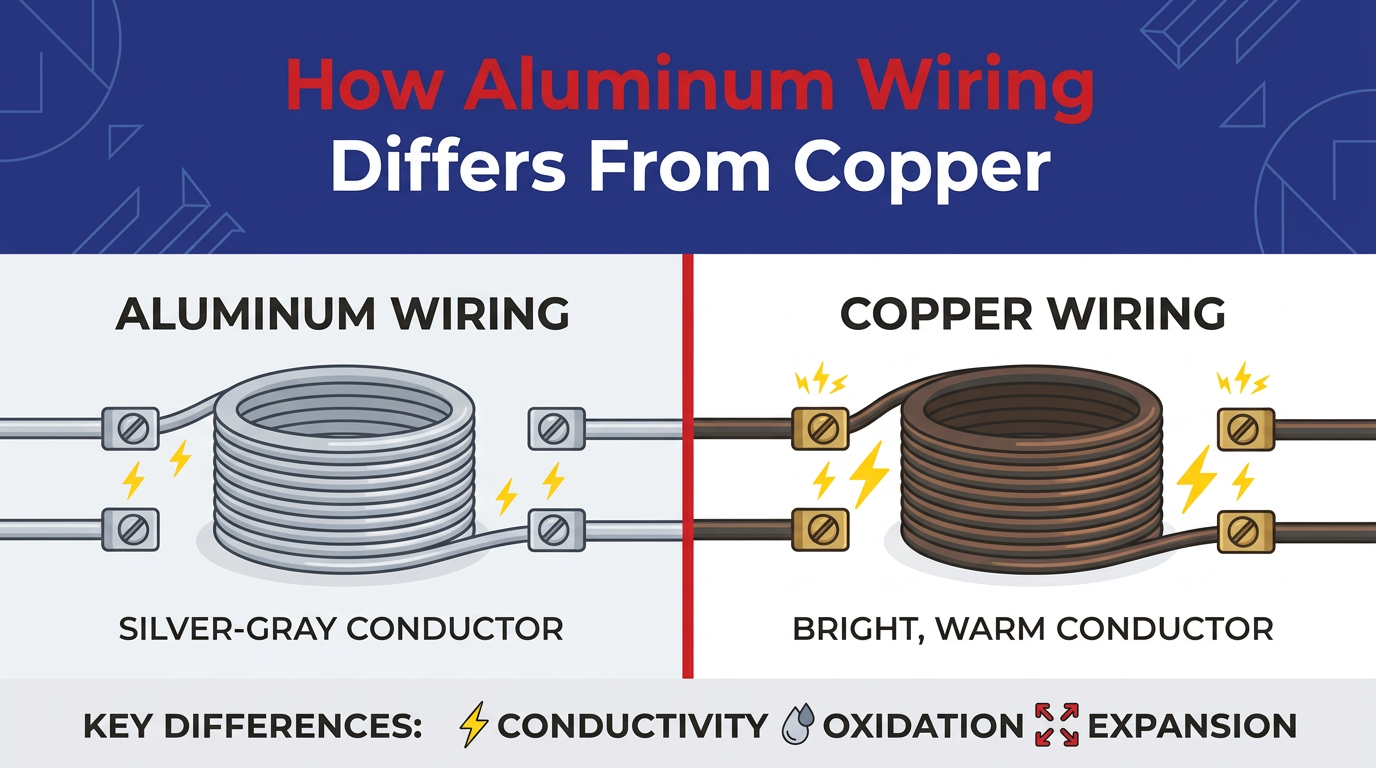
Aluminum expands and contracts more than copper as it heats and cools, which, over years of use, can gradually loosen connections at outlets, switches, and fixtures. It is also more prone to oxidation when exposed to air, forming a layer of aluminum oxide at the connection point that increases electrical resistance and generates heat. Combined, these two properties are why aluminum wiring is treated differently than copper under Ontario’s electrical code, and why replacing aluminum wiring is such a common recommendation from licensed electricians once these issues start to show.
Aluminum is also a less efficient conductor than copper for a given wire size, which is why aluminum branch circuits are typically installed one gauge larger than an equivalent copper circuit to carry the same load safely. This difference matters when connecting aluminum wiring to devices or splicing it with copper, since a mismatch in gauge or an incompatible connector can create exactly the kind of loose or high-resistance connection that leads to overheating.
None of this means aluminum wiring is inherently unsafe when installed correctly, but it does mean the margin for installation error is smaller than with copper, which is part of why the code restricts this work to licensed electricians.
Not sure what type of wiring your home has? Contact Canadian Wire Wizards for a professional assessment before your next renovation or insurance renewal.
Signs Your Home May Need Aluminum Wiring Replacement
Aluminum wiring does not always announce itself with an obvious failure. In many homes, the wiring has been in place for decades without a serious incident, making it easy for warning signs to go unnoticed until a problem becomes more serious.
Warning Signs to Watch For
Some of the most common signs include flickering or dimming lights, outlets or switch plates that feel warm to the touch, a faint burning smell near outlets or the electrical panel, and appliances that intermittently lose power for no obvious reason. Discolouration around an outlet or switch plate, or a breaker that trips more often than it used to, can also point to a loosening connection somewhere in the circuit. None of these signs guarantee a serious problem on their own, but any of them is a reasonable trigger to have the wiring inspected.
It is worth paying particular attention to circuits that see frequent use, such as kitchen outlets, since repeated load cycling accelerates the expansion and contraction that loosens aluminum connections over time. Homeowners who have lived in the same house for many years sometimes describe these symptoms as having developed gradually, a light that used to flicker only occasionally now doing so more often, or a breaker that trips only under heavier loads. Tracking when and under what conditions a symptom occurs can give an electrician useful information when diagnosing which circuits and connection points need attention first.
Why Professional Inspection Matters
Because aluminum wiring issues typically develop at hidden connection points inside walls, behind switch plates, and inside the panel, a visual check from a homeowner rarely tells the full story. As explained in our blog on enhancing electrical safety in older homes through aluminum wiring replacement, a licensed electrician can identify which circuits are aluminum, assess the condition of existing terminations, and recommend whether targeted repairs or a broader replacement plan makes more sense for your specific home.
A thorough inspection typically involves checking connections at a sample of outlets, switches, and light fixtures throughout the home, examining the panel for signs of overheating or corrosion, and reviewing which circuits were previously updated if the home has had any prior electrical work. This gives a much clearer picture than checking one or two visible locations, since the condition of aluminum wiring can vary considerably from one circuit to another depending on how heavily each has been used and whether any prior repairs were done correctly.
If you’ve noticed any of these warning signs, don’t wait for the problem to get worse. Schedule an inspection with Canadian Wire Wizards today.
Aluminum Wiring Replacement Options: Pigtailing vs Full Replacement
Once an inspection confirms that aluminum wiring is present and needs attention, homeowners typically face a choice between two approaches: pigtailing the existing wiring or replacing it outright with copper wiring.
What Pigtailing Involves
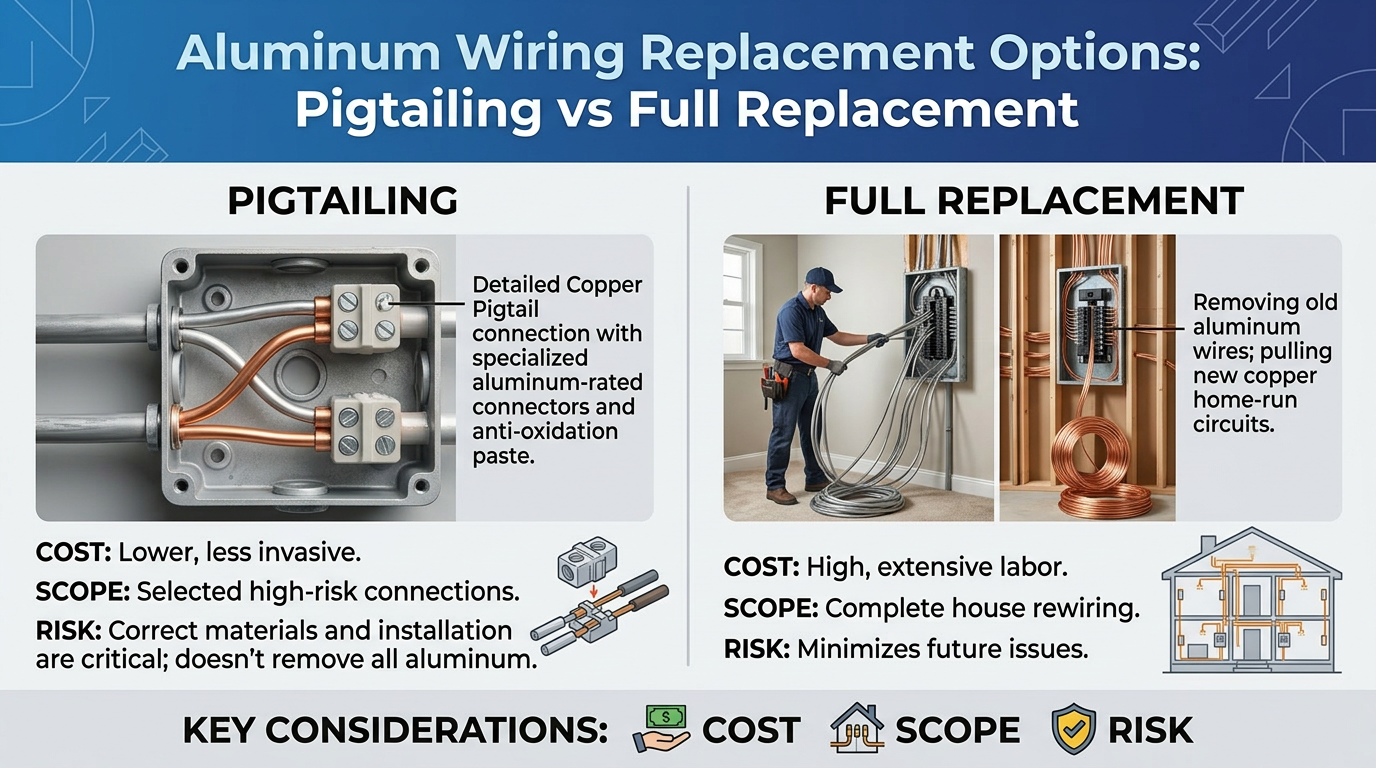
Pigtailing connects a short length of copper wire to the existing aluminum wire using an approved aluminum-to-copper connector, typically at outlets, switches, and fixtures, so the final connection to the device is made with copper rather than aluminum. This approach leaves the original aluminum wiring in place within the walls while addressing the connection points where most problems occur. It is generally less disruptive and less expensive than a full rewiring project, making it an appealing option for homeowners who want to improve safety without opening finished walls and ceilings.
The quality of a pigtail connection depends heavily on using the correct connector type, applying antioxidant compound where required, and torquing the connection to the manufacturer’s specification. Twist-on connectors rated for aluminum-to-copper connections, and crimp-style connectors designed specifically for this purpose are both used depending on the application and the electrician’s assessment of the circuit. It is also worth understanding that pigtailing is generally considered a long-term solution rather than a permanent one, and connections should be periodically re-inspected, since the underlying aluminum wiring inside the wall remains subject to the same expansion, contraction, and oxidation over time.
What Full Aluminum Wire Replacement Involves
A complete aluminum wiring replacement removes the existing aluminum conductors from active service and rewires the affected circuits with copper from the panel through to each device. Our detailed comparison of pigtailing versus full replacement for aluminum wiring walks through the practical trade-offs between the two approaches in more depth. Full replacement is more disruptive and costly in the short term. Still, it eliminates the aluminum-to-copper compatibility issue rather than managing it at each connection point, which is why it is often preferred when walls are already open for a renovation or when existing wiring shows significant wear.
Deciding to replace aluminum wiring in a house typically means accepting some short-term disruption in exchange for a longer-term solution. In most projects, only the visible and accessible aluminum wiring is physically removed. At the same time, any conductors buried behind finished walls that are not part of a renovation are safely disconnected and left in place rather than pulled out entirely. This approach keeps the project manageable in scope while still eliminating aluminum from active service throughout the home’s electrical system.
Choosing Between the Two
The right choice usually comes down to the condition of the existing wiring, the scope of any planned renovations, and budget. Homes with wiring in reasonably good condition and no immediate renovation plans often start with pigtailing at accessible connection points, while homes undergoing significant renovation, or those with wiring showing clear signs of deterioration, are often better served by a full replacement. A licensed electrician can walk through both options against your specific home and help you weigh the near-term cost against the long-term outcome.
Some homeowners choose a phased approach, starting with pigtailing at the circuits showing the most obvious symptoms while planning a fuller replacement for a future renovation. This can be a reasonable way to manage costs over time, provided each phase is properly documented, and the homeowner understands which circuits still contain aluminum wiring in active service. Keeping clear records of any electrical work, including which method was used on which circuits, also makes future work easier for any electrician who takes on the project later.
Cost also varies significantly with home size, the number of circuits affected, and whether walls need to be opened to access the wiring. Getting a detailed written quote that specifies exactly which circuits will be addressed and by which method helps avoid confusion later, particularly if a phased approach is used and only part of the home’s wiring is addressed in the current phase.
Unsure whether pigtailing or full replacement is right for your home? Get a professional recommendation from Canadian Wire Wizards.
Ontario Electrical Code Requirements for Aluminum Wiring
Any work involving aluminum wiring in Ontario needs to comply with the Ontario Electrical Safety Code, and understanding the basic requirements helps homeowners have a more informed conversation with their electrician.
Key OESC Rules to Know
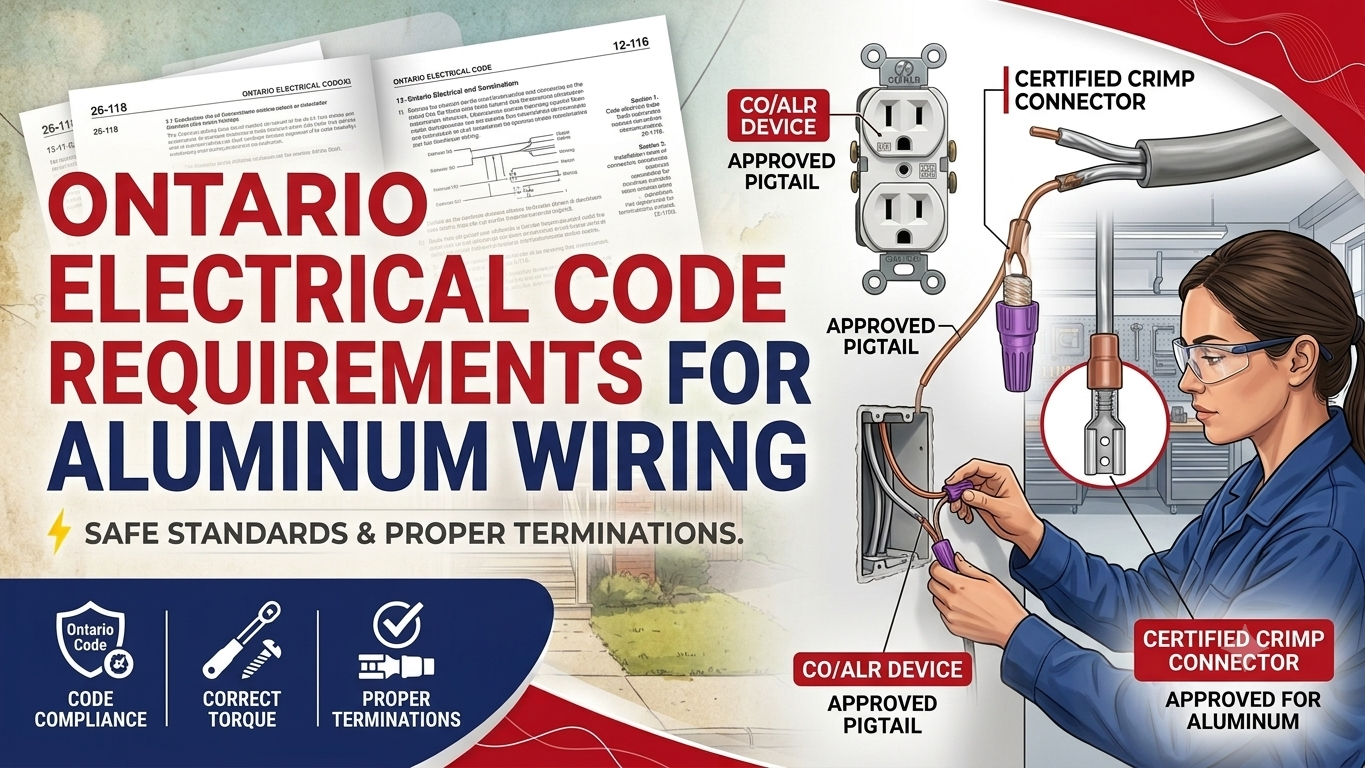
The code requires that all devices connected to aluminum wiring be marked “CO/ALR,” which stands for Copper-Aluminum Revised, indicating they are rated for use with aluminum conductors. Our guide to understanding the Ontario Electrical Safety Code on aluminum wiring outlines these requirements in more detail, including the rule that any splicing or termination of aluminum conductors must use connectors specifically rated for aluminum, along with an appropriate antioxidant compound where required. Only licensed electrical contractors are permitted to carry out work involving aluminum branch wiring, which rules out DIY repairs as a safe or code-compliant option.
The code does not require homeowners to remove properly installed, correctly terminated, and functioning aluminum wiring, which is an important distinction for anyone who assumes that aluminum wiring automatically fails an inspection. The code requires that any new work involving aluminum conductors, whether a repair, an extension, or a modification, follow the correct procedures for connectors, torque, and device compatibility. This means a home with well-maintained aluminum wiring can pass inspection. In contrast, a home with poorly terminated or DIY-modified aluminum wiring is far more likely to run into problems.
Staying Compliant During Aluminum Wire Outlet Replacement
Even a seemingly simple aluminum wire outlet replacement must comply with code requirements for aluminum-rated devices, approved connectors, and proper torque settings at each termination. Incorrect installation, such as using a standard copper-only device or applying insufficient torque at a connection, can create a high risk of loose connections the code is designed to prevent. Working with an electrician who properly documents this work also matters for insurance purposes, since many insurers require confirmation that any electrical updates meet current code requirements.
This is one area where the cost of hiring an unlicensed or inexperienced contractor can outweigh any short-term savings. An aluminum wire outlet replacement that looks complete from the outside can still be non-compliant if the wrong connector was used or the connection was not properly torqued. These issues are often invisible until they cause a problem months or years later. Requesting documentation of the specific devices and connectors used, along with confirmation that a licensed electrician performed the work, gives homeowners a clear record to rely on for future reference or insurance purposes.
Have questions about whether your home’s aluminum wiring meets current code? Reach out to Canadian Wire Wizards for a code-compliant assessment.
The Benefits of Replacing Aluminum Wiring in Your Home
Beyond meeting code requirements, there are several practical reasons homeowners choose to replace aluminum wiring rather than leave it as-is.
Improved Safety and Reduced Fire Risk
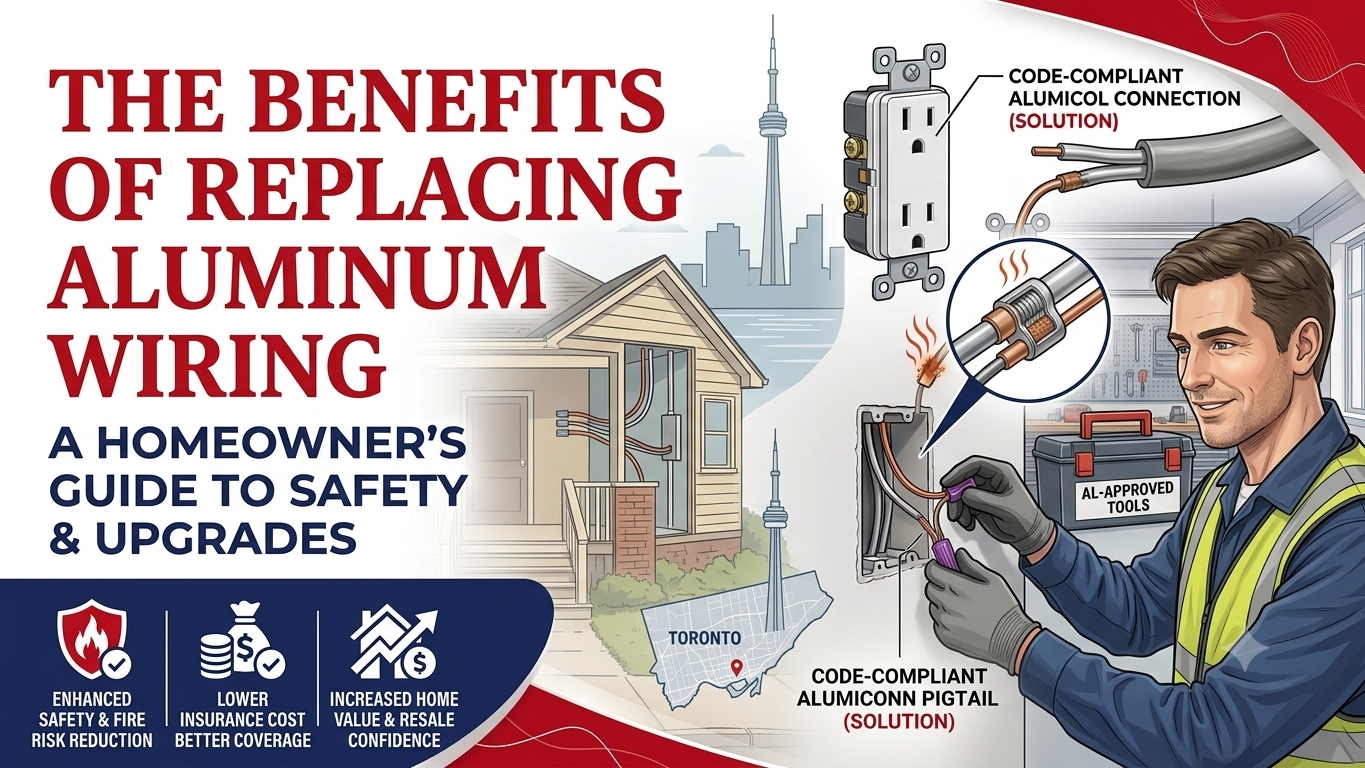
The primary reason to replace aluminum wiring is straightforward: it reduces the risk of loose connections, overheating, and arcing that make aluminum wiring a known fire hazard as it ages. This is particularly relevant for homes with wiring that has never been inspected or upgraded since original installation, where decades of thermal cycling may have already weakened key connection points.
Beyond the connection points themselves, addressing aluminum wiring often uncovers other issues that have accumulated in an older electrical system, such as outdated panels, undersized circuits for modern appliance loads, or prior repairs not done to current standards. Approaching aluminum wiring repair as part of a broader review of the home’s electrical system, rather than treating it in isolation, often gives homeowners a more complete picture of what their home actually needs to operate safely.
Lower Home Insurance Costs
Insurance providers increasingly factor wiring type into their underwriting decisions, and homes with unaddressed aluminum wiring can face higher premiums or, in some cases, difficulty securing coverage. As detailed in our blog on how replacing aluminum wiring can make your home insurance less expensive, documented aluminum wiring repair or replacement work can help homeowners qualify for better rates, since it demonstrates that the electrical system has been brought up to modern safety standards.
Some insurers require an inspection report or a signed statement from a licensed electrical contractor confirming the condition or repair status of aluminum wiring before adjusting a policy, particularly at renewal or when a new policy is being underwritten. Keeping this documentation on file, alongside receipts and permits for any electrical work, makes it easier to respond quickly if an insurer requests proof of an update, and can prevent a renewal delay or unexpected premium increase.
Increased Home Value and Resale Confidence
Buyers and home inspectors alike tend to view aluminum wiring as a flag during a resale, often prompting requests for further inspection or price negotiation. A home with documented, code-compliant aluminum wiring replacement or repair work removes that uncertainty. It can make a property more attractive to buyers who might otherwise be cautious about an older electrical system.
Sellers in particular benefit from addressing this proactively rather than waiting for it to surface during a buyer’s home inspection. An aluminum wiring issue discovered mid-negotiation often leads to rushed repairs, price concessions, or a delayed closing, none of which serve the seller’s interests. Having the work completed and documented well before listing a property, with permits and an electrician’s report on hand, gives sellers a straightforward answer to any question a buyer or their inspector raises about the home’s electrical system.
Ready to protect your home’s safety, insurance standing, and resale value? Contact Canadian Wire Wizards to discuss aluminum wiring replacement for your property.
Frequently Asked Questions
Is aluminum wiring always dangerous?
Aluminum wiring that is properly installed and maintained can operate safely, but it requires aluminum-rated devices, approved connectors, and periodic inspection, as its connections are more prone to loosening over time than copper connections.
Canadian Wire Wizards has been the trusted choice for aluminum wiring replacement in Toronto for over a decade, with service also extending to North York, East York, Mississauga, Scarborough, Vaughan, and Richmond Hill. If your home may still have aluminum wiring, contact our team for a thorough inspection and a straightforward recommendation for your property.
