...

Planning to add a hot tub to your home involves more than just selecting the perfect model; it requires a thorough understanding of the electrical demands to ensure safety and efficiency. From choosing the ideal location to understanding grounding, bonding, and power supply requirements, every step is crucial. Moreover, considering future maintenance access and adhering to local codes can significantly impact the overall experience and cost. This blog focuses on these essential aspects and the need for a professional electrician’s assistance for a safe hot tub electrical installation.

Understanding Electrical Requirements

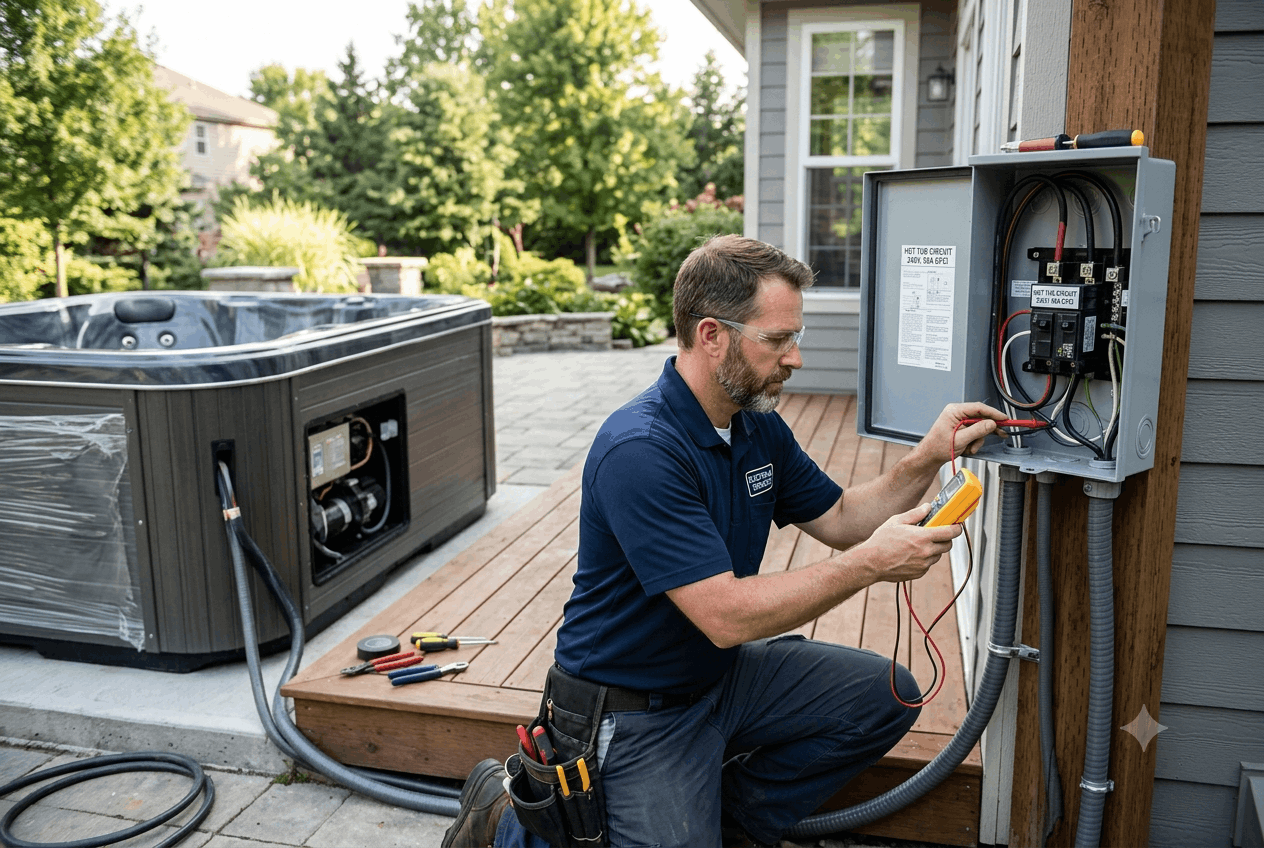
Hot tubs require a separate electrical circuit to function safely and efficiently. A professional hot tub electrical installation ensures that your hot tub is powered correctly without overloading your home’s electrical system.

  1. Selecting the Right Location: Consider its usage and maintenance when planning the location of your hot tub setup. Positioning your hot tub closer to the electrical panel can make the installation smoother and more cost-effective, blending practicality with the anticipation of relaxation.
  2. Evaluating the Grounding and Bonding: Proper grounding and bonding are crucial aspects of safety. They protect against electrical hazards. It’s essential to adhere to local codes and standards, emphasizing the need for a skilled hot tub electrician.
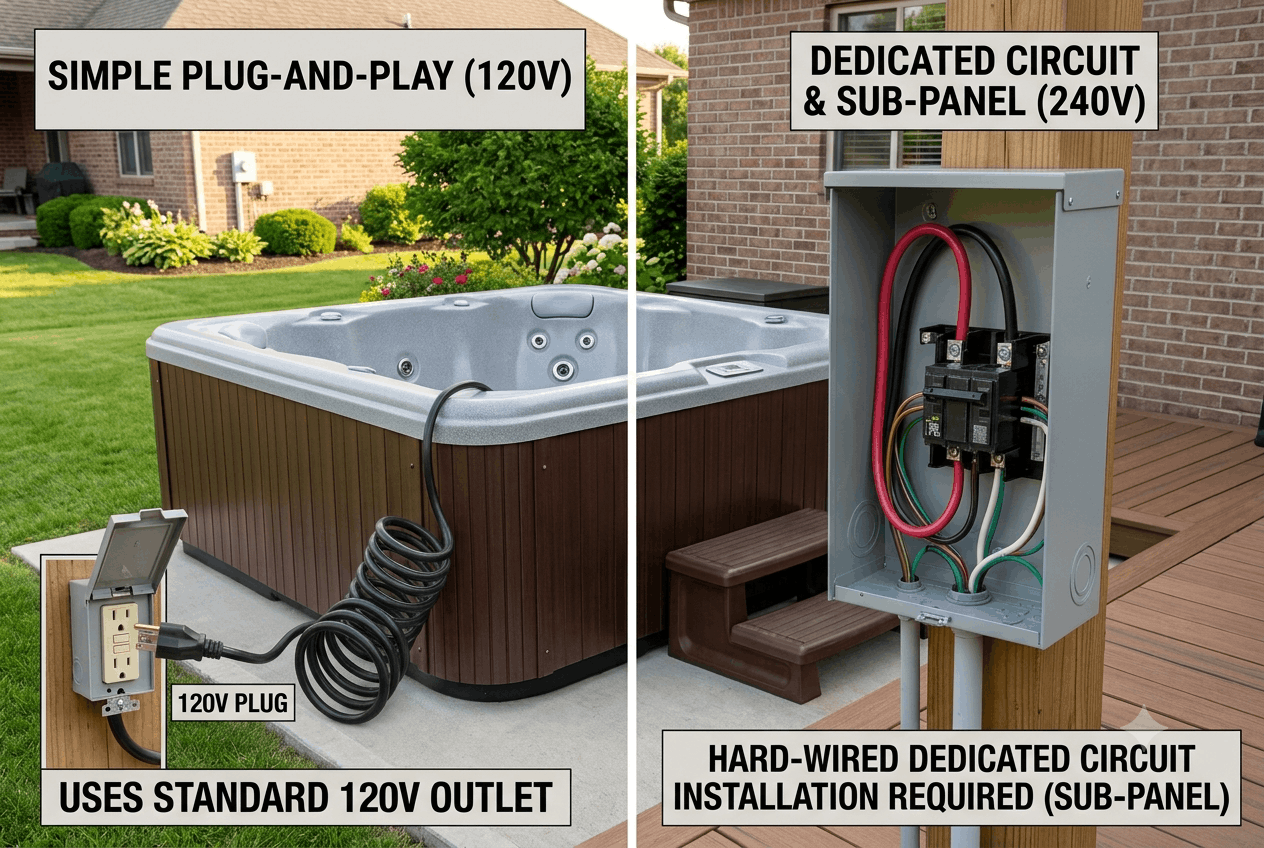
  3. Considering the Power Supply: Most hot tubs require a 220-240 volt power supply. Understanding your home’s current electrical capacity is vital to avoid any potential issues.
  4. Planning for Future Access: Electrical components and plumbing should be easily accessible for future maintenance or repairs. Strategic placement can save significant time and effort later.
  5. Estimating the Average Cost of Hot Tub Electrical Installation: Costs vary depending on the intricacy of the installation, local regulations, and distance from the electrical grid. A detailed consultation can provide a clearer picture of the expected investment.
  6. Ensuring Compliance with Local Codes and Regulations: Local codes and regulations dictate specific requirements for hot tub installations. Compliance is not just about legality; it’s about ensuring safety and efficiency.
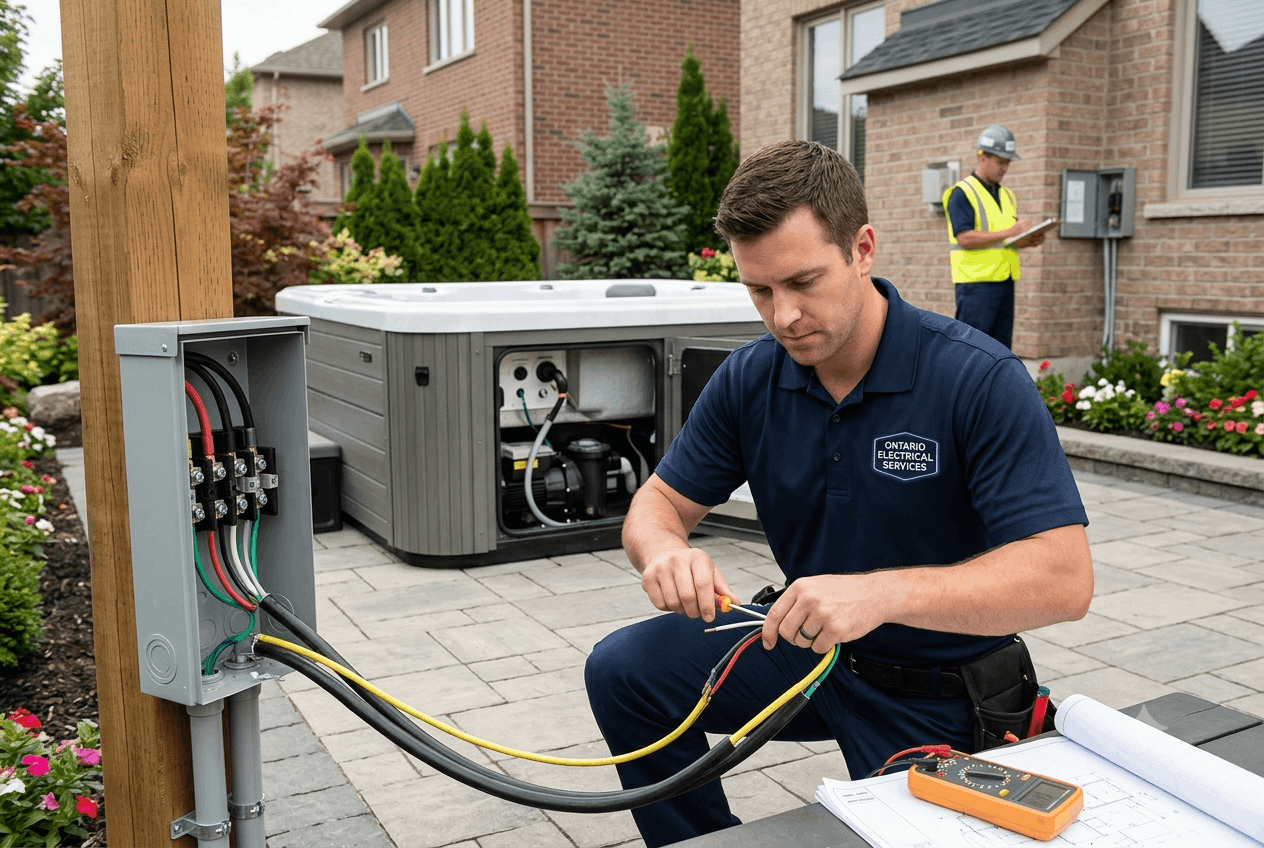
  7. Hiring Professional Electricians: Hiring licensed electricians, especially those registered with the Electrical Contractors Registration Agency, ensures that your installation meets all safety and quality standards.

Regular Inspections and Maintenance

Maintaining the safety and functionality of your hot tub’s electrical system is crucial once the installation is complete. This requires consistent inspections and upkeep. A company specializing in these services can provide thorough care to ensure your hot tub stays in prime condition. Such attention to detail ensures that your relaxation haven remains a source of joy without any electrical hiccups, offering peace of mind. 

Wrapping Up 

Considering these key factors and seeking the expertise of professional electricians, you can ensure a safe, efficient, and enjoyable hot tub experience. Engaging with specialists ensures that every aspect of your installation meets the highest safety and performance standards. To delve deeper into how you can bring this experience to your backyard, consider contacting a trusted electrical service provider for further insights and assistance. If you plan on installing a hot tub and searching for a hot tub electrician near me, consider Canadian Wire Wizards. We are ready to bring your dream to life with our professional services; for more information, visit us at Canadian Wire Wizards.

Author

Demetrois Alafogiannis

Demetrois Alafogiannis is an experienced electrical professional and entrepreneur with over 20 years of hands-on experience in residential and commercial electrical services. He is the President and Lead Electrician at Canadian Wire Wizards Inc., a Toronto-based electrical services company known for quality workmanship, safety, and ... Read More

Aluminum Wiring Replacement and Pigtailing: What Homeowners Need to Know
Many homes built between the 1960s and late 1970s in Ontario still contain aluminum wiring. While it was commonly used at the time, today it requires careful evaluation due to aging connections and
What It Takes to Replace Knob and Tube Wiring in Toronto Homes
Knob and tube wiring is still found in many older Toronto homes, especially those built before the 1950s. While it was considered safe when originally installed, it no longer meets the demands of
A Complete Guide to Electrical Installation Services for Modern Homes
Electrical systems are the foundation of how modern homes function. From powering appliances and lighting to supporting smart technology and EV charging, every system depends on proper wiring and
Top Residential EV Charger Installers in East York
Electric vehicle adoption is accelerating across East York, with more homeowners investing in home charging systems for convenience and long-term savings. As demand grows, many property owners begin
Best Companies for EV Charger Installation at Home in Toronto
Electric vehicle ownership is increasing rapidly across Toronto, and home charging has become a practical necessity for many homeowners. Installing a charger at home offers convenience, faster
Licensed Electricians for Knob and Tube Rewiring Services
Older homes across Ontario often contain legacy electrical systems that no longer meet modern safety and performance standards. One of the most common examples is knob and tube wiring, which was

What Our Customers Says

-->